Water: Understanding Its Crucial Role in Business
- primestackapps
- Jan 30
- 5 min read

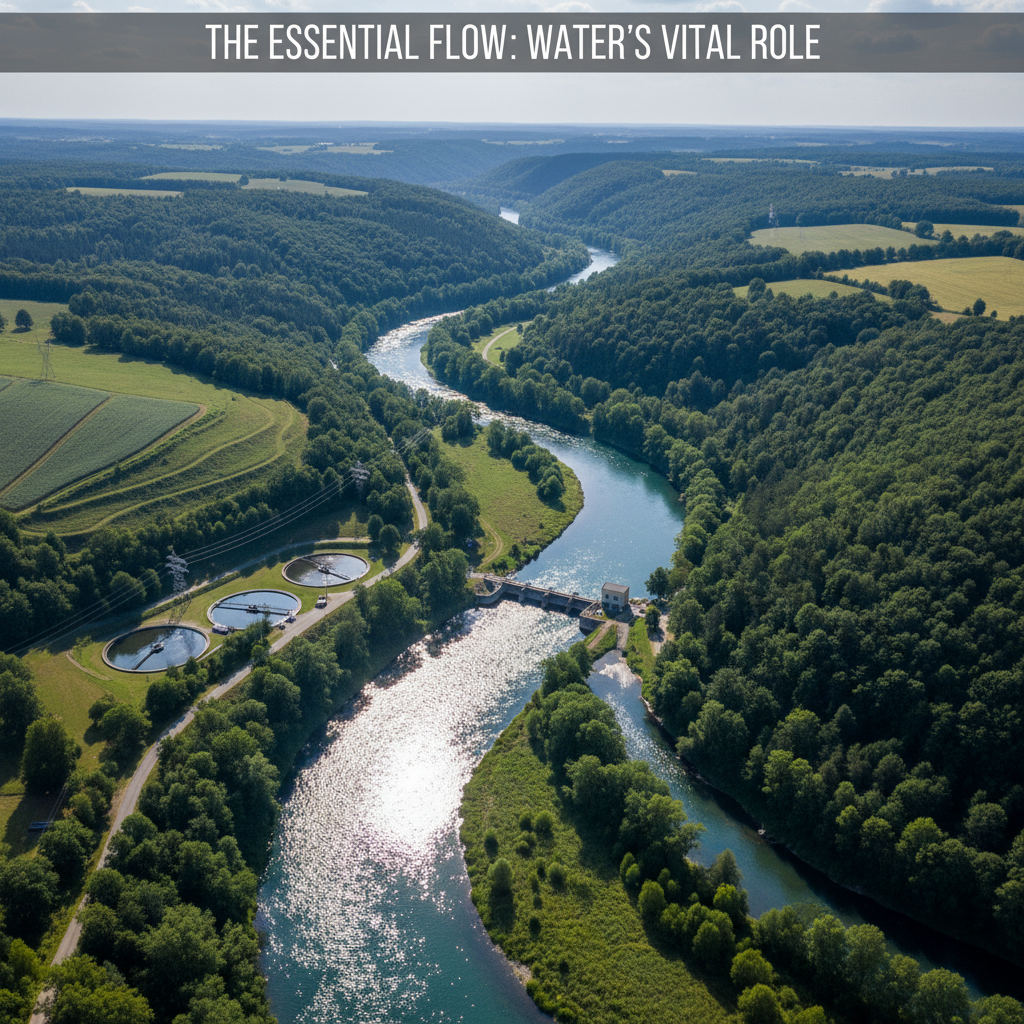
Water is the most fundamental substance on our planet, serving as the biological medium for all known life and a primary driver of Earth's geological and climatic systems. Despite its ubiquity, the complexity of water—from its molecular structure to its role in global commerce—is often underestimated. This guide provides an authoritative overview of water, examining its unique properties, its essential functions in the human body, and the critical challenges facing our global water supply.
The Chemical and Physical Water Properties
To understand the importance of water, one must first look at its unique chemical composition. Composed of two hydrogen atoms and one oxygen atom, the H2O molecule is defined by its polar nature. This polarity allows water to form hydrogen bonds, which result in several extraordinary characteristics that are rare among other liquids.
The Universal Solvent
Water is often referred to as the 'universal solvent' because it dissolves more substances than any other liquid. This is vital for every living creature on Earth. It means that wherever water goes, either through the ground or through our bodies, it takes along valuable chemicals, minerals, and nutrients.
Cohesion and Adhesion
Water molecules are highly attracted to one another (cohesion) and to other surfaces (adhesion). These properties allow for capillary action, the process that enables plants to draw water from the soil up into their highest leaves against the force of gravity.
Biological Significance and Water Benefits
The human body is approximately 60% water, and every organ system relies on it to function correctly. From cellular respiration to temperature regulation, the biological water benefits are vast and non-negotiable for survival.
Thermoregulation: Water helps maintain body temperature through perspiration and respiration.
Joint Lubrication: It acts as a shock absorber and lubricant for joints and the spinal cord.
Waste Elimination: Water is essential for the kidneys and liver to flush out waste products via urine and sweat.
Nutrient Transport: It facilitates the movement of oxygen and nutrients through the bloodstream to cells.
According to the United States Geological Survey (USGS), water serves as a vital nutrient to the life of every cell, acting first as a building material. The USGS is a leading authority on water science, providing extensive data on how water interacts with both the environment and human biology.
The Global Water Cycle
The water cycle, also known as the hydrologic cycle, describes the continuous movement of water on, above, and below the surface of the Earth. This cycle is a closed system, meaning the total amount of water on Earth remains constant, though its state (solid, liquid, or gas) changes frequently.
Evaporation and Transpiration
The cycle begins with the sun heating the Earth's surface water, causing it to evaporate into water vapor. Additionally, plants release water vapor into the atmosphere through a process called transpiration. Together, these processes move moisture into the atmosphere.
Condensation and Precipitation
As water vapor rises, it cools and condenses into clouds. When these clouds become saturated, they release water back to the Earth's surface as precipitation—rain, snow, sleet, or hail. This replenishment is vital for maintaining freshwater reservoirs.
Economic and Industrial Water Uses
Beyond biological survival, water is a cornerstone of the global economy. Its applications span across every major industry, from energy production to manufacturing.
Agriculture: Accounting for approximately 70% of global freshwater withdrawals, irrigation is the largest use of water worldwide.
Energy Production: Water is used for cooling in thermal power plants and as the primary medium in hydroelectric dams.
Manufacturing: Industries use water for fabricating, processing, washing, diluting, cooling, or transporting a product.
Sanitation and Health: Reliable access to clean water is the foundation of public health and modern sanitation systems.
Fascinating Water Facts
To truly appreciate this resource, it is helpful to look at some staggering water facts that highlight its scarcity and importance. While 71% of the Earth's surface is covered in water, the vast majority is not easily accessible for human use.
Only 2.5% of the Earth's water is fresh water, and most of that is locked in glaciers and ice caps.
Less than 1% of the world's fresh water is accessible for direct human use.
A person can live for about a month without food, but only about a week without water.
Water expands when it freezes, which is why ice floats—a property that prevents entire lakes from freezing solid and killing aquatic life.
Challenges to Global Water Security
As the global population grows and climate patterns shift, the importance of water management has never been higher. Water scarcity now affects more than 40% of the global population, a figure that is projected to rise.
For a deeper understanding of the international efforts to manage these resources, the United Nations Water (UN-Water) website offers comprehensive data on water-related challenges, including sanitation and scarcity. UN-Water coordinates the work of UN entities and international organizations working on water and sanitation issues.
Pollution and Contamination
Industrial runoff, agricultural pesticides, and untreated sewage continue to threaten freshwater sources. Protecting water quality is as important as managing water quantity, as contaminated water is unusable for drinking or agriculture.
Conclusion
Water is more than just a commodity; it is the lifeblood of our planet and the engine of human progress. Understanding the properties, benefits, and uses of water is the first step toward more sustainable management of this finite resource. As we face a future of increasing environmental uncertainty, our ability to protect and optimize our water usage will define the health of our societies and the stability of our global economy.
If you are looking for professional guidance on digital services related to environmental data, water management systems, or sustainability reporting, our team is here to help. We provide specialized consultations to help organizations leverage technology for better resource stewardship.
Frequently Asked Questions
Why is water called the universal solvent?
Water is called the universal solvent because it is capable of dissolving more substances than any other liquid due to its polar chemical structure.
What percentage of the Earth's water is drinkable?
Less than 1% of the Earth's total water is fresh, liquid, and accessible for human consumption and use.
How does the water cycle work?
The water cycle is a continuous process involving evaporation from surfaces, transpiration from plants, condensation into clouds, and precipitation back to Earth.
What are the primary health benefits of staying hydrated?
Hydration supports temperature regulation, joint lubrication, nutrient transport, and the efficient removal of waste from the body.
Which industry uses the most water worldwide?
Agriculture is the largest consumer of freshwater, accounting for approximately 70% of all global water withdrawals.
Why does ice float on water?
Ice floats because water is less dense as a solid than as a liquid. This unique property is caused by hydrogen bonding, which creates a crystal lattice structure that pushes molecules further apart as they freeze.
Comments