Dog vs Cat Marketing: Which Animal Wins Social Media?

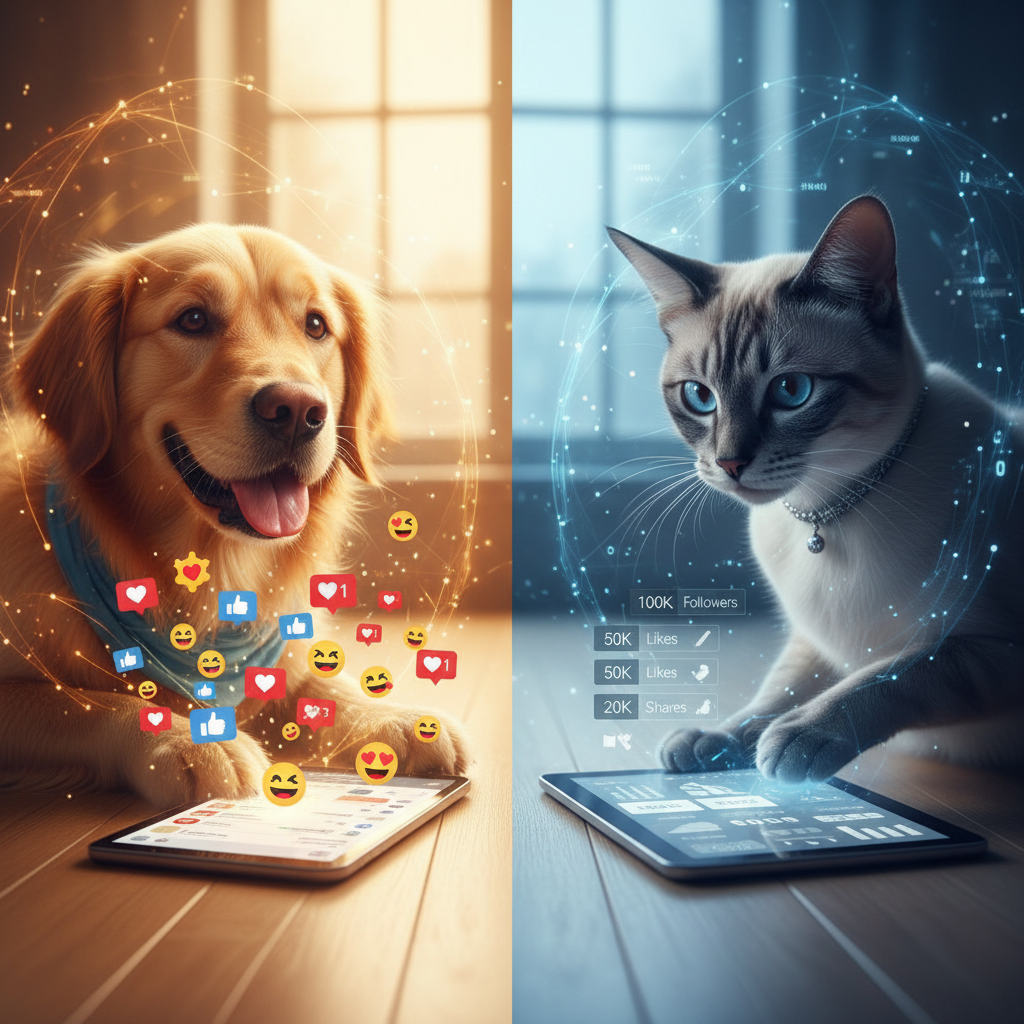
The internet was practically built on a foundation of fuzzy paws and twitching whiskers. Since the early days of the World Wide Web, the debate has raged: are we a 'dog person' internet or a 'cat person' internet? For brands and creators, this isn't just a matter of personal preference—it is a high-stakes question of engagement, reach, and conversion. When we look at dog vs cat marketing, we aren't just looking at cute pictures; we are analyzing complex consumer behaviors and emotional triggers that drive billions of views every single day.
Table of Contents
If you are looking to elevate your brand's voice through strategic digital storytelling, you can explore our professional digital services to see how we help businesses grow. Understanding the nuances of viral animal content is just the beginning of a successful online journey.
01. The Psychology of Viral Animal Content
To understand why animal content dominates our feeds, we have to look at the brain. Humans are biologically hardwired to respond to 'baby schema'—features like large eyes, round faces, and clumsy movements. This triggers a release of dopamine and oxytocin, making us feel happier and more relaxed. In the fast-paced world of social media, these 'micro-moments' of joy are the currency of attention.
Dogs and cats tap into different emotional reservoirs. Dogs often represent loyalty, high energy, and the 'best friend' archetype. When a brand uses dog marketing campaigns, they are often tapping into themes of adventure, family, and reliability. On the other hand, cats are the kings of relatability. Their independent, often judgmental, and occasionally chaotic behavior mirrors the internal monologue of the average internet user.
The 'Aww' Factor vs. The 'LOL' Factor
While both animals can be funny and cute, cats tend to dominate the 'humor' category. Think of the 'I Can Has Cheezburger' era or the more recent 'vibing cat' memes. Dogs, however, often win on the 'heartstrings' front. A comprehensive analysis of domestic pet ownership shows that our emotional bonds with these animals differ significantly, which translates directly into how we interact with their content online.
Dogs: Associated with inspiration, protection, and outdoor activity.
Cats: Associated with home life, independence, and quirky personality traits.
Shared: Both reduce stress and increase the likelihood of a user 'sharing' a post to spread the joy.
02. Analyzing Dog Marketing Campaigns: The Power of Loyalty
Dog marketing campaigns are some of the most successful in advertising history. Brands like Subaru, Budweiser, and Amazon have used the image of the faithful canine to build deep trust with their audiences. Because dogs are seen as selfless and loving, they transfer those positive attributes to the brand itself. This is particularly effective for businesses that want to be seen as 'human-centric' or 'community-focused'.
In the digital space, dog content thrives on platforms like Instagram and TikTok where 'wholesome' content performs well. A well-placed Golden Retriever in an ad for insurance can make a sterile industry feel warm and approachable. For companies, understanding dogs for businesses is essential when trying to create a brand identity that feels safe and welcoming.
Key Elements of Successful Dog Campaigns
High-energy video content (playing fetch, running in parks).
Emotional storytelling (reunions, puppy growth montages).
User-generated content (UGC) showing customers' dogs using the product.
Specific breed targeting to reach niche demographics.
Interestingly, the visual identity of the dog matters too. Using dog breed logos can instantly communicate a brand's personality, whether it's the elegance of a Greyhound or the tenacity of a Bulldog.
03. Cat Marketing Campaigns: The Icons of the Internet
If dogs are the 'best friends' of the marketing world, cats are the 'celebrities.' Cat marketing campaigns often rely on the animal's unique personality and 'main character energy.' Cats are the original viral superstars, from Grumpy Cat to Nyan Cat. Their appeal lies in their unpredictability. You never quite know what a cat is going to do, which makes them perfect for short-form video content that relies on a 'punchline' or a surprise twist.
Brands that use cats often lean into a more clever, ironic, or sophisticated tone. While a dog ad might make you cry, a cat ad is more likely to make you smirk. This makes cats the go-to choice for tech brands, lifestyle influencers, and creative agencies. Their 'cool' factor is undeniable, and they often command higher engagement rates because their content is inherently more 'memable'.
Why Cats Rule the Meme Economy
Relatability: Cats often look bored, annoyed, or hungry—feelings humans relate to daily.
Visual Comedy: Their liquid-like movements and expressive faces are perfect for GIFs.
Low Production Value: Some of the best cat content is raw and unedited, making it feel authentic.
Niche Communities: 'Cat people' are notoriously active and vocal online, creating powerful echo chambers for content.
04. Engagement Metrics: The Battle of the Numbers
When we look at the raw data of dog vs cat marketing, the results are surprisingly split. According to various social media studies, dogs are actually mentioned more frequently on Instagram, with hashtags like #dogsofinstagram far outperforming #catsofinstagram in total post volume. However, cats often see higher engagement rates per post. This suggests that while there are more dog lovers posting, cat lovers are more intensely focused on the content they see.
On platforms like YouTube, the 'cat video' remains a cultural titan. However, for long-form educational content, dogs take the lead. People are more likely to search for a guide to happy and healthy canine companions than they are for cat training, simply because the lifestyle of a dog owner often involves more active management and outdoor interaction.
Platform-Specific Performance
Instagram: Dogs win on volume; Cats win on aesthetic and 'save' rates.
TikTok: Cats win on short-form 'fail' videos; Dogs win on 'POV' and lifestyle vlogs.
Facebook: Dogs dominate through community groups and local rescue stories.
Twitter/X: Cats rule the meme landscape and reaction images.
05. Developing Your Pet Social Media Strategy
Whether you are a pet-focused business or a general brand looking to add some 'paws' to your feed, you need a cohesive pet social media strategy. You can't just post a random photo of a kitten and expect a viral hit. You need to understand your audience's specific relationship with animals. Are they looking for comfort? Entertainment? Education?
If you are targeting families, dogs are your best bet. If you are targeting a younger, tech-savvy, or urban demographic, cats might resonate more. The key is authenticity. Users can tell when an animal is being used as a 'prop' versus when the animal is a genuine part of the brand story. For those just starting out, a beginner's guide to a happy pup can offer insights into the kind of helpful, value-driven content that builds a loyal following.
Tips for High-Engagement Pet Content
Focus on the eyes: Direct eye contact from animals increases human empathy.
Use trending audio: Match the animal's movements to popular sounds on TikTok or Reels.
Tell a story: Don't just show the pet; show the journey, like choosing the right dog leash.
Engage with the community: Respond to comments as if you are the pet (if that fits your brand voice).
06. The Rise of the 'Petfluencer'
The dog vs cat marketing debate wouldn't be complete without mentioning 'Petfluencers.' These are animals with millions of followers who earn more per post than many human influencers. Names like Jiffpom (a Pomeranian) or Nala Cat have built massive empires. For brands, partnering with these accounts can offer an incredible return on investment (ROI).
The advantage of using a petfluencer is that they are generally 'brand safe.' They don't get involved in political scandals or post controversial opinions. They provide a pure, joyful connection to the audience. Whether it's a guide for dog owners or a luxury cat furniture reveal, these influencers bridge the gap between product and consumer with ease.
07. Visual Content and Branding: Dogs vs Cats
From a design perspective, dogs and cats offer different visual languages. Dogs are often photographed in bright, natural light with wide-angle lenses to capture their energy. Cats are frequently shot in more controlled, indoor environments with a focus on texture and close-up details. This affects how a brand's aesthetic is perceived.
If your brand is about 'adventure,' you want a dog in a forest. If your brand is about 'coziness,' you want a cat on a velvet sofa. Using dog graphic design services can help you integrate these visuals into your marketing materials professionally, ensuring that your pet-themed content doesn't look amateurish but rather enhances your brand's authority.
08. Key Takeaways: Dog vs Cat Marketing
Dogs excel at building trust, representing family values, and driving community engagement.
Cats are the undisputed champions of the 'meme economy' and high-engagement humor.
Viral animal content works because it triggers biological 'happiness' chemicals in the brain.
A successful pet social media strategy requires choosing the right animal to match your brand's specific personality.
Petfluencers offer a 'brand-safe' way to reach millions of engaged followers with high ROI.
09. Conclusion: Who Truly Wins?
So, in the battle of dog vs cat marketing, who takes the crown? The truth is that it's a tie—but only if you know how to use them correctly. Dogs win the hearts of those looking for loyalty and adventure, while cats capture the minds of those looking for wit and relatability. The most successful brands don't choose one over the other; they understand the unique 'vibe' each animal brings and deploy them strategically to meet their marketing goals.
Ready to take your digital strategy to the next level? You should reach out to our team to start growing your brand today with content that truly resonates with your audience.
Whether you're team dog or team cat, the power of animal-centric marketing is undeniable. By tapping into the universal love for our furry companions, you can create a brand that isn't just seen, but is truly loved. Keep experimenting, keep analyzing your metrics, and most importantly, keep sharing the joy that only a wagging tail or a soft purr can provide.
Comments